Austria holds twelve UNESCO World Heritage Sites, and an unusually high number of them sit within comfortable day-trip distance of Vienna. That is not a coincidence. The Danube corridor and the eastern Alps were shaped by centuries of imperial, ecclesiastical, and trading history, and UNESCO recognition tends to follow exactly that kind of layered heritage.
If you are based in Vienna and want to see genuine World Heritage sites without committing to a multi-city itinerary, several of them are reachable, explored, and returned from in a single day. This guide covers which sites qualify, how far each one is, and what makes each worth the drive.
Quick Answer
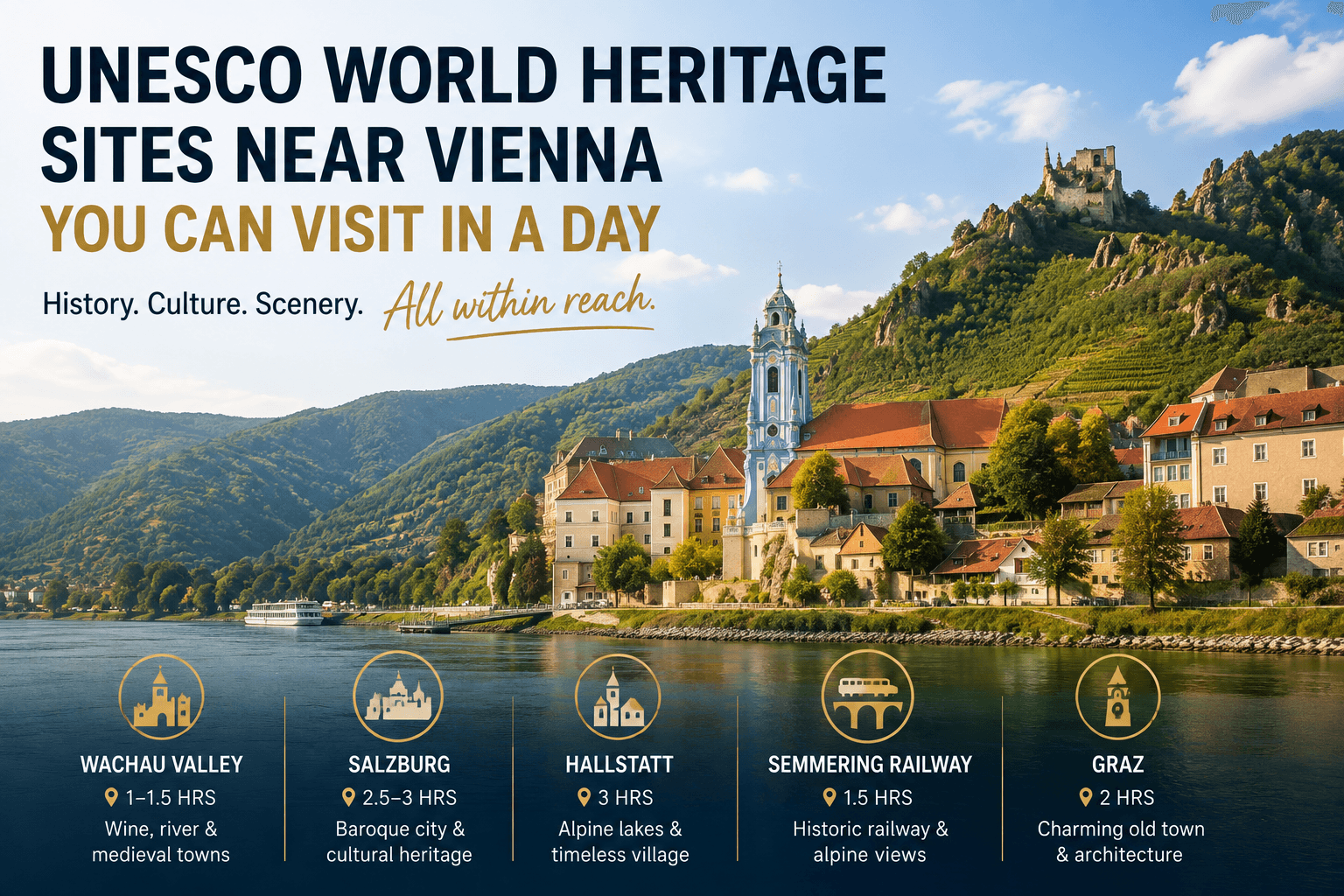
The UNESCO World Heritage sites you can realistically visit as a day trip from Vienna are the Wachau Cultural Landscape (about 90 minutes away), the Historic Centre of Salzburg (about 2.5 to 3 hours), the Hallstatt-Dachstein Salzkammergut region (about 3 hours), the Semmering Railway (about 90 minutes), and the Historic Centre of Graz (about 2 hours). Vienna’s own historic centre and Schönbrunn Palace are UNESCO sites within the city itself.
Is Vienna Itself a UNESCO World Heritage Site?
Yes. The Historic Centre of Vienna has been a UNESCO World Heritage Site since 2001, covering the area within and around the Ringstrasse, including St. Stephen’s Cathedral, the Hofburg, and the surrounding baroque and Gründerzeit districts. The Palace and Gardens of Schönbrunn are listed separately and have held UNESCO status since 1996. The historic centre spent several years on UNESCO’s List of World Heritage in Danger over concerns about high-rise construction near the city park, and was formally removed from that danger list in 2026 after the City of Vienna revised the disputed building plans and adopted binding height restrictions.
That history is worth knowing before you plan any day trip, because it means Vienna’s own UNESCO status is genuinely protected, not just a historical label. It also means you are already inside a World Heritage Site before you go anywhere else, which makes a good starting point for any of the routes below with a private Vienna sightseeing tour.
Wachau Cultural Landscape: The Closest UNESCO Site to Vienna
The Wachau Valley, a stretch of the Danube between Melk and Krems, was inscribed as a UNESCO Cultural Landscape in 2000 for the way vineyards, medieval ruins, and riverside villages have coexisted along the river for over a thousand years. It is the closest UNESCO site to Vienna, roughly 70 to 90 minutes by road.
The valley works well as a half-day or relaxed full-day outing. Melk Abbey, perched above the river at one end of the valley, and the walled town of Dürnstein are the two stops most visitors prioritize. A guided Wachau Valley trip typically covers both without feeling rushed.
Historic Centre of Salzburg
Salzburg’s old town became a UNESCO World Heritage Site in 1996, recognized for its exceptionally well-preserved Baroque architecture shaped by centuries as the seat of powerful prince-archbishops. Hohensalzburg Fortress, the cathedral, and the tightly packed old town streets are all within the protected zone.
At two and a half to three hours from Vienna, Salzburg is a longer commitment, but it rewards the drive with a genuinely walkable historic core. Most travellers get four to five hours of actual sightseeing time on a Salzburg day trip once travel time is factored in.
Hallstatt-Dachstein Salzkammergut
This UNESCO Cultural Landscape, listed in 1997, covers the lake district around Hallstatt, recognized for over 2,500 years of continuous salt mining and the way settlement has adapted to the dramatic alpine terrain. Hallstatt village itself, with its lakeside houses and mountain backdrop, is the most visited part of the protected zone.
At roughly three hours each way, this is the longest drive on this list, and parking in the village is limited. A pre-arranged Hallstatt day trip avoids the parking search entirely, which matters more here than at almost any other stop.
Semmering Railway
The Semmering Railway, completed in 1854 and UNESCO-listed in 1998, was one of the first mountain railways built anywhere in the world and is still recognized as a landmark of civil engineering. The route crosses viaducts and tunnels through the eastern Alps roughly 90 minutes south of Vienna.
Unlike the other sites on this list, the appeal here is watching the railway in its landscape rather than walking through a historic town. It suits travelers who want a shorter, quieter day trip focused on scenery and engineering history rather than shopping streets and cafes.
Historic Centre of Graz
Graz’s old town, along with Schloss Eggenberg, was added to the UNESCO list in 1999 and 2010, respectively, recognized for a well-preserved blend of Gothic, Renaissance, Baroque, and Art Nouveau architecture influenced by the city’s position on the edge of the former Habsburg and Ottoman spheres. Graz sits about two hours south of Vienna.
Compared with Salzburg, Graz sees far fewer tourists relative to the quality of its architecture, which makes it a strong choice for travelers who have already done the more famous stops and want something quieter.
Comparison Table: UNESCO Sites Reachable from Vienna
| UNESCO Site | Year Listed | Distance from Vienna | Best Suited For |
|---|---|---|---|
| Wachau Cultural Landscape | 2000 | ~1-1.5 hours | Half-day trips, wine and river scenery |
| Historic Centre of Salzburg | 1996 | ~2.5-3 hours | Full-day cultural trips |
| Hallstatt-Dachstein Salzkammergut | 1997 | ~3 hours | Scenic full-day trips, photography |
| Semmering Railway | 1998 | ~1.5 hours | Shorter trips, engineering and landscape |
| Historic Centre of Graz | 1999/2010 | ~2 hours | Quieter alternative to Salzburg |
Planning a UNESCO Day Trip from Vienna
Most of these sites are historic town centers or protected landscapes, which means narrow streets, limited or restricted parking, and pedestrian zones that a self-driven rental car cannot always enter. This is a genuine practical consideration, not just a comfort preference. In Hallstatt and Dürnstein in particular, vehicle access is tightly controlled during peak season.
A private chauffeur who already knows the drop-off points, protected zones, and realistic timing for each site removes that uncertainty. For travelers who want to see more than one UNESCO site over a longer stay, a customized private day trip can be built around a specific combination, such as the Wachau Valley plus Melk, or Salzburg with a stop in the Salzkammergut on the way.
Frequently Asked Questions
How many UNESCO World Heritage sites are near Vienna?
Austria has twelve UNESCO World Heritage sites in total, and five of them, the Wachau Cultural Landscape, the Historic Centre of Salzburg, Hallstatt-Dachstein Salzkammergut, the Semmering Railway, and the Historic Centre of Graz, are within a realistic day-trip radius of Vienna.
Is Vienna itself a UNESCO World Heritage Site?
Yes. The Historic Centre of Vienna has been listed since 2001, and the Palace and Gardens of Schönbrunn, separately, since 1996. Vienna’s historic center was removed from UNESCO’s danger list in 2026 after the city revised a disputed high-rise development near the city park.
What is the closest UNESCO site to Vienna?
The Wachau Cultural Landscape is the closest, roughly 70 to 90 minutes from central Vienna by road, making it the easiest option for a half-day visit.
Can I visit Hallstatt as a day trip from Vienna?
Yes, though it is the longest drive on this list at around three hours each way. Most visitors plan for a full day, and many choose a private chauffeur due to limited parking in the village itself.
Do I need a guide to visit these UNESCO sites?
A guide is not required, but local knowledge helps significantly given restricted vehicle access in historic centers like Hallstatt and Dürnstein. A private chauffeur familiar with each site’s access rules can save considerable time compared to navigating independently.
Which UNESCO day trip from Vienna is best for a first visit to Austria?
Salzburg is usually recommended for a first visit since it combines a genuinely UNESCO-recognized historic center with enough sights, cafes, and walking streets to fill a full day comfortably.
Choosing Your Route
Once you know which UNESCO site fits your schedule and interests, the next step is deciding how to get there. For longer routes like Salzburg or Hallstatt, an overview of available day trips is a useful starting point, and for shorter outings, the hourly chauffeur service gives you flexibility to combine a UNESCO stop with other errands or sights on the same day.


Related posts


RECENT POSTS
- How to Book a Wedding or Event Chauffeur in Vienna August 19, 2026
- Chauffeur vs Taxi vs Uber in Vienna: Which Is Best for Visitors? August 19, 2026
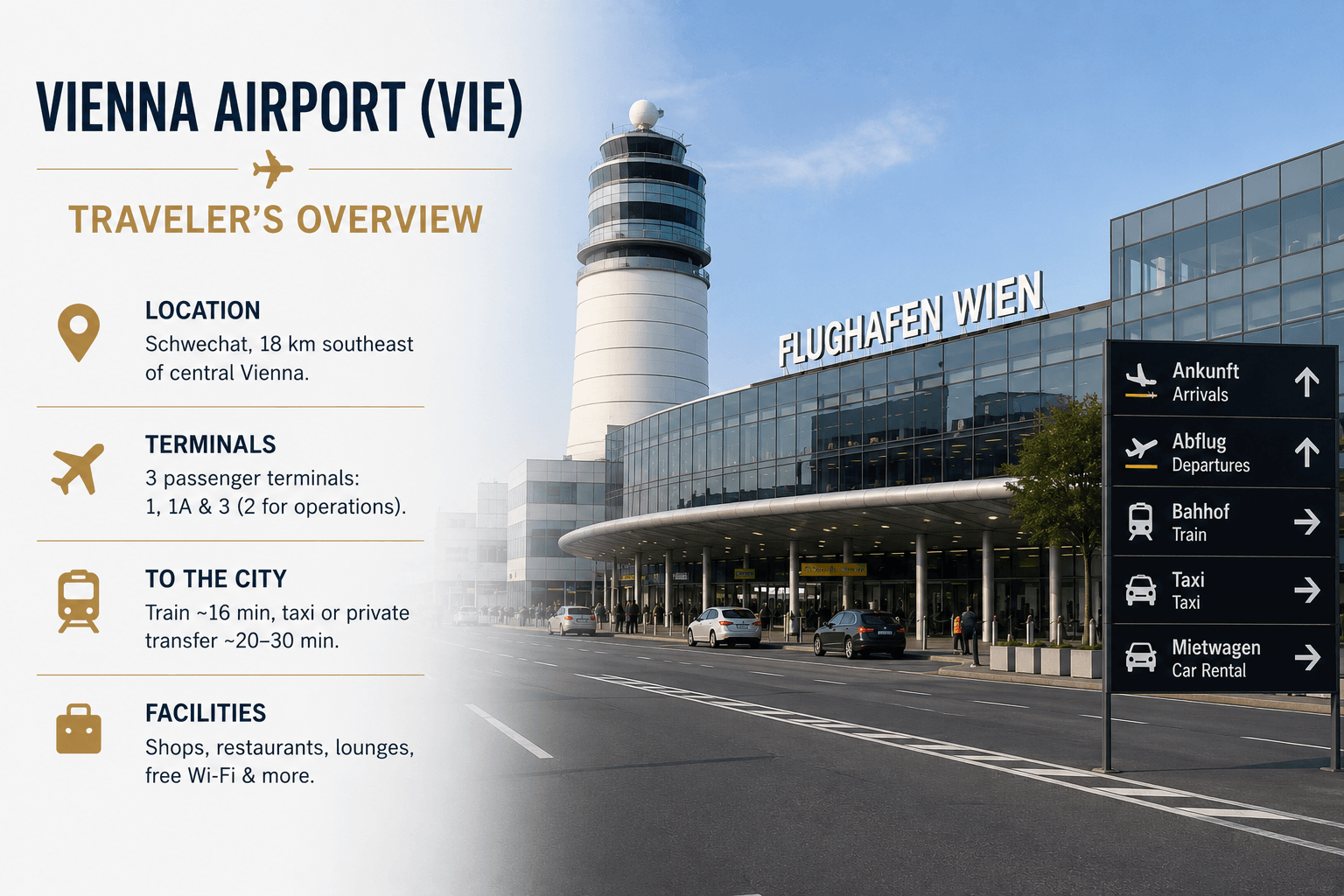
- Vienna Airport (VIE): A Complete Traveler’s Overview August 19, 2026
ABOUT
Pellentesque sed risus feugiat lectus ornare pharetra nec id nisl. Sed dictum nunc a elit gravida consequat. In non accumsan nibh. Mauris at libero id magna viverra rutrum vel et felis. Suspendisse blandit tellus sed metus suscipit molestie.
Leave a Comment